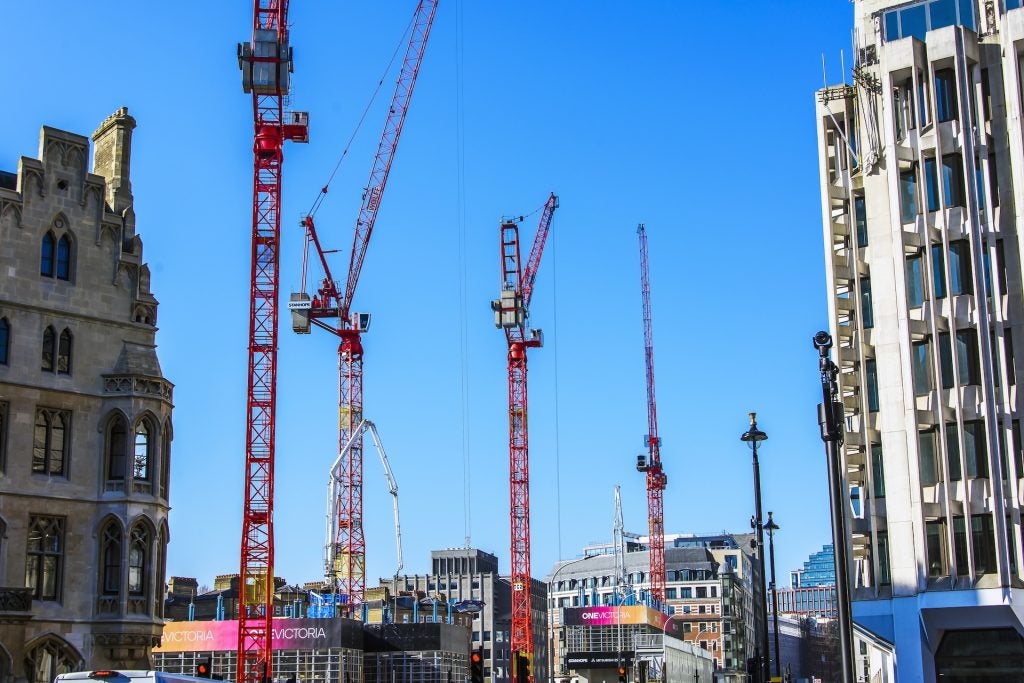

The redevelopment of 1 Victoria Street, in Westminster, London, UK, is underway and features the installation of nine of Wolffkran’s WOLFF tower cranes on original 1960s foundations presenting unusual engineering challenges in central London, UK.
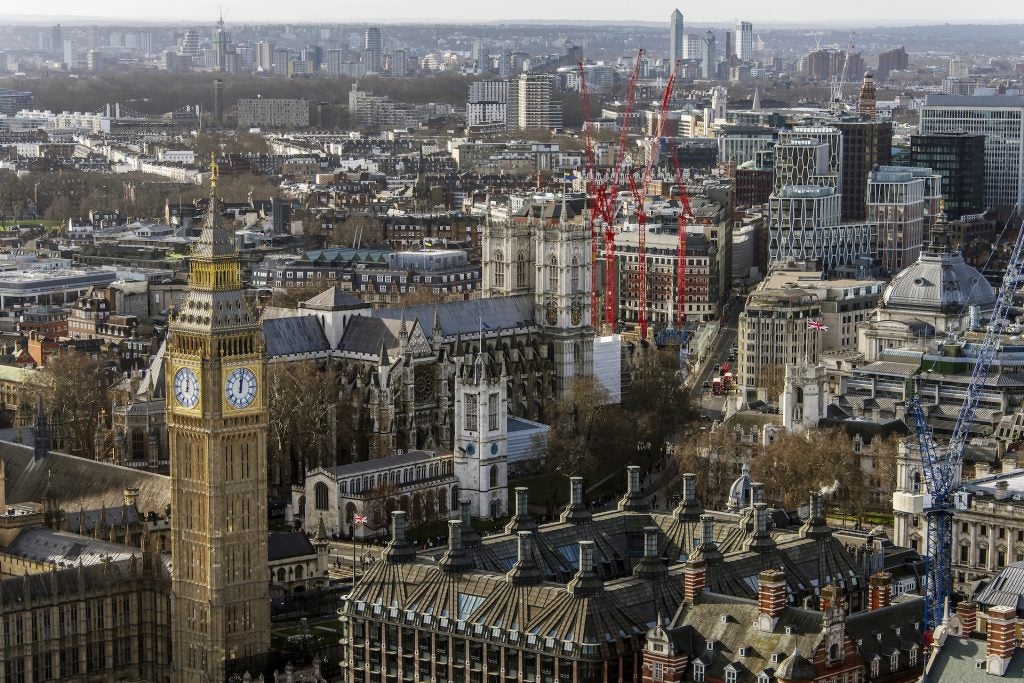
The project, which repurposes and partially retains the structure of a former office block, aims to deliver a modern workplace with reduced embodied carbon by using existing foundations instead of new piling.
Initial demolition work for the scheme was managed by Keltbray, which deployed a WOLFF 355 B luffing jib crane (TC0) to handle heavy lifts in a confined urban environment.
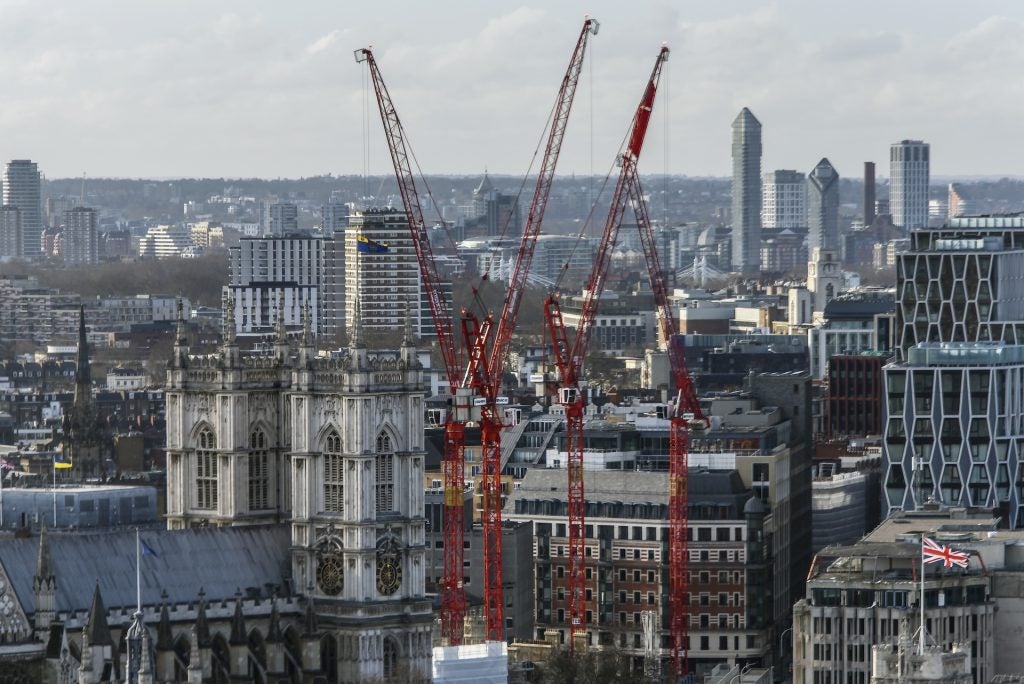
This crane was responsible for moving major demolition equipment and materials, including excavators, dumpers, tracked loaders, skips, generators and structural steel.
Subsequent phases are being led by Mace Construct, which oversaw the installation of four additional WOLFF tower cranes, one WOLFF 166 B (TC 1) and three WOLFF 355 B models (TC 2,3,4), at the B2 basement level.
These cranes support core structural work, including the slipforming of the concrete core, where the formwork is moved continuously as concrete is poured. This process puts considerable demands on crane timing and availability.
The project’s design, which retains large portions of the original foundations, means cranes cannot be freely positioned or anchored in conventional, purpose-built concrete bases as typically seen in new builds.
Instead, each crane’s location and configuration had to align precisely with the available legacy foundation support points.
This required the use of the WOLFF cross-frame system, which allows crane legs to be adjusted individually from 6m to 10m, and enables the crane tower to rotate into the correct alignment.
On the installation of TC2, all four legs of the cross-frame were set to different lengths to match the irregular foundation positions.
Future construction phases will see further complexity, particularly during dismantling. The basement slab will be cast tightly around the crane bases, limiting working space and headroom.
As using conventional mobile cranes will not be possible, ceiling hoists, low-level forklifts and skating systems will be used to remove crane components.
Late 2026 will mark the start of the next major phase, moving crane operations to the roof to facilitate façade and building services installation.
Once completed, 1 Victoria Street is expected to provide new office and retail space while reusing approximately 52% of the original structure. Occupation is anticipated in early 2028.